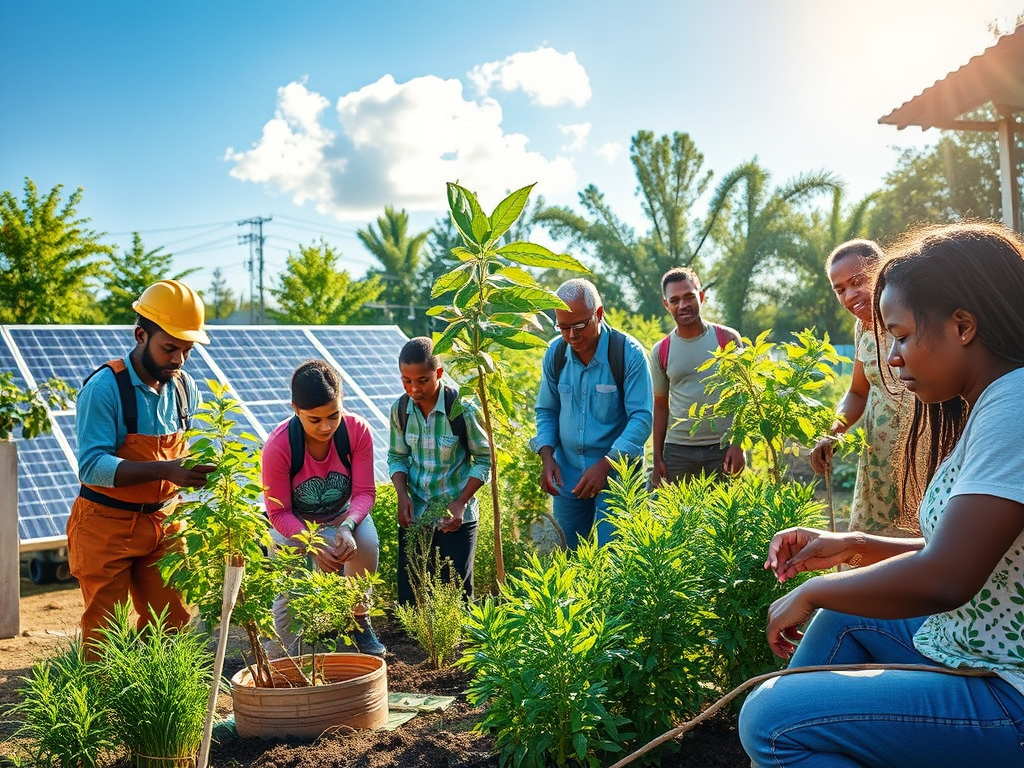
The encouraging truth is: We can increase sustainable jobs and reduce pollution at the same time; when we design our systems with people, planet, and future generations in mind. Plans for sustainable growth can be made in every community and people can create opportunities for each other as they increase productivity.
Below you will find a clear, hopeful road map that connects jobs, education, innovation, and everyday action, written in a way you can also reuse to encourage the people in your community to join in and live sustainably.
Sustainable jobs grow fastest when we focus on industries that solve problems instead of creating them, as this approach not only fosters innovation but also drives economic growth by addressing the pressing challenges of our time. By prioritizing sectors such as renewable energy, sustainable agriculture, and green technology, we pave the way for a workforce that contributes to environmental conservation and social welfare. This shift encourages businesses to adopt eco-friendly practices and invest in solutions that lead to a more sustainable future, ultimately benefiting both the planet and the economy as we create opportunities for skilled labor that aligns with our collective goals for a healthier world.
High-impact Sustainable job areas:
- Renewable energy (solar, wind, bioenergy)
- Green construction & retrofitting
- Sustainable transport & mobility
- Regenerative agriculture & food systems
- Recycling, repair, and reuse industries
- Water purification & conservation
- Climate education & eco-content creation
These jobs reduce pollution by design, not by cleaning up later. It is far better for our environment to be protected than to be polluted and left unhealthy or cleaned.

Start Eco Education Early
Long-term change starts with children.
When kids learn: How pollution happens, how resources are reused, how green solutions create jobs and how they can plan for a bright future. They will be prepared to live in a much better way as they prepare for the sustainable future.
They grow up ready to build better systems, not repeat harmful ones.
Eco kids books, songs about reusing, reducing, recycling, tree planting, gardening waste and other eco-friendly tips will help to guide the children as they plan future careers.
Games that reward eco choices are coming soon.
This will build the next generation of green workers and leaders as we progress towards the sustainable future.
Help Businesses Transition, Not Just Shut Down
Instead of eliminating jobs, help industries evolve by embracing innovation and fostering a culture of adaptability. By investing in training programs and upskilling initiatives, we can equip the current workforce with new technologies and methods that complement the changing landscape. This proactive approach not only preserves jobs but also creates new opportunities for growth and development within various sectors. Industry leaders should prioritize collaboration with educational institutions and stakeholders to ensure that employees can navigate the future of work, ultimately leading to a more resilient economy.
Examples:
Factories switching to cleaner materials, transport companies adopting electric fleets, farmers shifting to regenerative methods and small businesses reducing waste & energy costs.
This creates: Retraining for new jobs and the employment of trainers, individuals for consulting roles, for green tech maintenance work. Pollution will decrease while employment grows.
Turn Waste Into Work
Waste is not useless, it’s misplaced value. In our consumer-driven society, we often overlook the potential that lies within what we consider trash. Items discarded without a second thought can hold significant worth, either through reuse, recycling, or repurposing. By changing our perspective, we can transform waste into valuable resources, fostering a culture of sustainability and responsibility. Embracing this mindset can lead to innovative solutions for reducing our environmental impact while simultaneously promoting economic growth and community engagement, reminding us that every discarded item has the potential to contribute positively to our world.
Sustainable Jobs can be created in:
Recycling innovation, upcycling design, repair & refurbishment, composting & bio-products, eco-packaging and farming.
Every product reused: Saves resources, lowers pollution and decreases the amount of waste that gets to the landfill. Reusing helps us to have cleaner air and improved health.
Build Local, Community-Based Solutions
Local action creates local employment, fostering a sense of community and encouraging economic growth. When residents invest their time and resources in local initiatives, such as recycling businesses, they not only provide job opportunities for themselves but also for their neighbors, enhancing overall prosperity. Supporting local businesses and engaging in community projects leads to a thriving job market that meets the unique needs of the area, ultimately contributing to the sustainable development that benefits everyone.
Examples: Community solar projects, urban gardens & green spaces, Local recycling hubs, Eco-education programs, repair cafés.
These reduce: long-distance transport pollution, unemployment in communities

Use Technology and AI for Good
AI and digital tools can: Optimize energy use, reduce waste in production, predict pollution sources, support eco education platforms, create green media jobs
The Eco KIds project that has eco books, songs, videos and more is a part of the green digital economy. When the eBooks that are filled with simplified eco friendly solutions, tips and plans are bought online, the project grows because more marketing and promotion can be done with the money spent. This causes more people to learn about sustainable living and they will be encouraged to begin new sustainable businesses in simple ways. There is a green family on Facebook where more encouragement and tips are shared.
Empower Families to Create Change
Every household is a micro-economy, functioning as a small-scale representation of the larger economic system. They can all contribute to their country’s economy in much better ways when they are earning more, not just through increased purchasing power, but also by fostering local businesses and creating job opportunities. As households grow financially stronger, they become more capable of investing in education, healthcare, and personal development, which in turn fuels innovation and productivity. This virtuous cycle has the potential to enhance overall economic stability, promote sustainable growth, and empower communities to thrive collectively.
When families: Reduce waste, buy sustainable products, support eco brands, teach kids about sustainability and begin developing more sustainable businesses. They will be on the path to the bright future they really want to have.
Demand shifts will happen as families will shop in new ways and support the sustainable businesses. Businesses will have no choice, they will need to adapt and jobs will follow the families values indirectly.
Policy + People = Real Impact
Governments play a role by: Funding green startups, supporting eco education, incentivizing clean energy, the protecting of natural resources and encourage more people create momentum; through awareness, culture, and daily choices.
The Big Picture (Hopeful Truth)
We don’t have to choose between jobs or the planet. We can have: meaningful work, cleaner air & water, healthier children, stronger communities
When we educate children today, support green creativity, and invest in sustainable systems, we build a future where work helps the Earth instead of harming it.
 FunWritings
One thought on “Future Focused Investment in Green Industries That Create Sustainable Jobs”