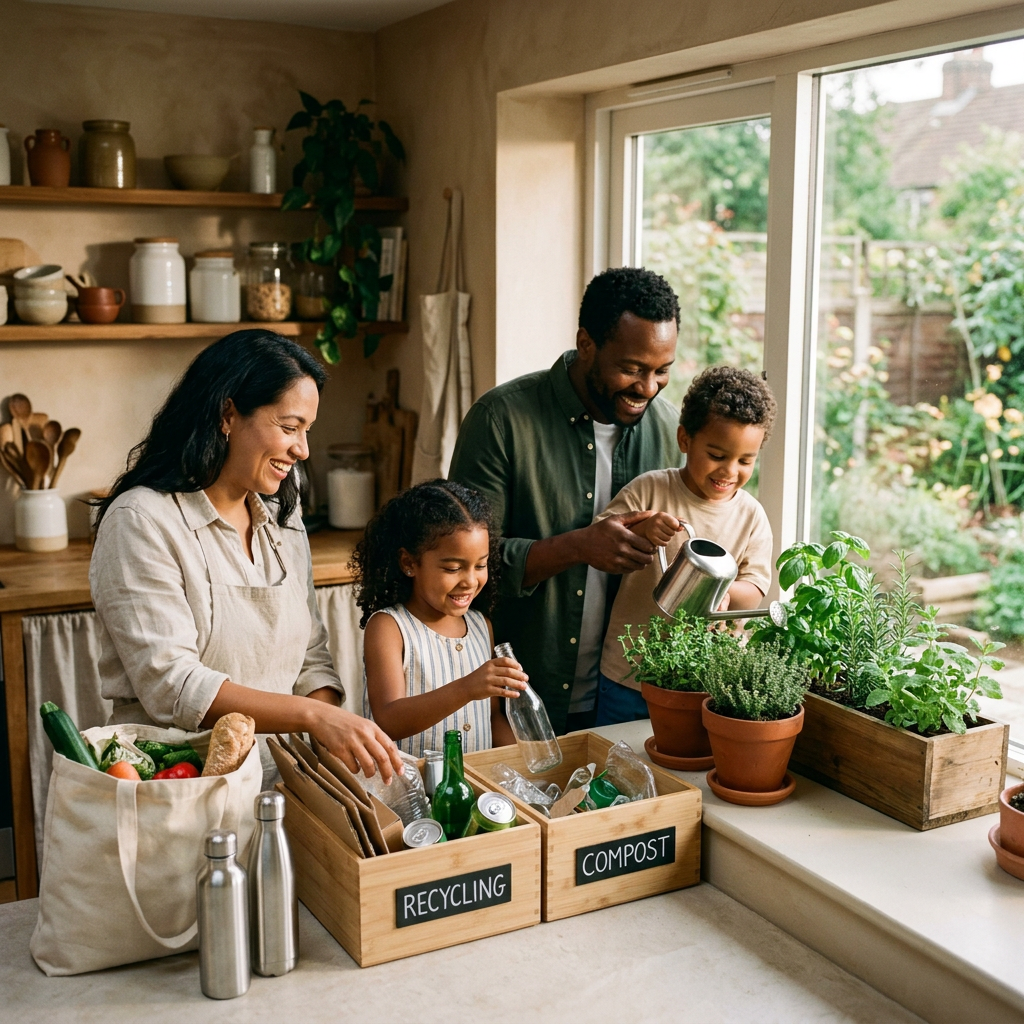
Saving money while we protect the environment can inspire us to live in new and better ways by practicing simple eco-friendly family habits every day. By choosing sustainable options at home—like reusing, reducing and recycling, conserving energy and water, and buying less but choosing stronger, longer-lasting products—we save money while also reducing pollution in our neighborhoods and communities. Children raised in these families will be future focused and grow up seeing that caring for the planet is a normal part of life. They learn how to become responsible citizens who respect nature, avoid waste, and think carefully about how they use resources. These future-focused kids are also more likely to become green entrepreneurs who create sustainable jobs for others, using creativity and innovation to build businesses that protect the environment, support local communities, and show that a greener lifestyle can be both affordable and successful for families everywhere.

Use reusable bags and bottles instead of single-use plastic
When we purify water at home and make our own juice, we can use reusable bottles and save the money we would spend on bottled water and juice each day. When children learn how to save money and protect the planet in this way, they begin using money more wisely. The benefits they see will grow over time.
Turn off lights and unplug devices when they aren’t being used
Turning off lights and unplugging devices when they are not in use helps families lower their electricity bills and reduce energy use. Using less power also means less pollution from power generation, making energy saving at home an important part of sustainable living. When parents practice these simple habits every day, children learn how to make responsible, eco-friendly choices that help protect the planet and benefit the whole family.
Save water by taking shorter showers and turning off the tap while brushing teeth
These simple eco-friendly habits help us use less water and lower our bills. The money saved over time can be invested in many small ways, and eventually in a child’s education. As they grow up and earn in meaningful ways, the family can be very proud. Small eco-friendly changes made each day will make the future bright, and the money we save can be invested in many more ways as lives are improved.
Walk, bike, carpool, or use public transportation whenever possible
With petrol prices rising so quickly because of the war in the Middle East, your family can save money by driving less, while also cutting fuel use, reducing air pollution, and lowering carbon emissions.
With decreased use of vehicles, we will spend less on fuel and vehicle upkeep. This can help families save money while also reducing air pollution and carbon emissions, and it may even contribute to a reduction in respiratory illnesses.

Reduce food waste by planning meals and saving leftovers
Planning meals and saving leftovers can lower food costs in our homes. When we plan to use leftovers, they won’t be forgotten and left to spoil. Meal planning also helps us have fewer leftovers in the first place, and we can trim our grocery lists as well. Spending less and saving money in this way is good for every family.
Eat more plant-based meals, such as one meat-free day each week
Plant-based meals are good for your health, and it is helpful to introduce children to this way of eating. You might even ask them to assist with the planning. This can encourage them to eat more at mealtimes, and when the meal is made with food grown in your garden, you might find that children enjoy eating it even more.
A meat-free day might lead to more meat-free days and an additional decrease in your supermarket bill. The small changes we make can lead to bigger transformations over time.
Recycle correctly by learning what materials your local program accepts
Learning what your local recycling program accepts and recycling more, can even help you earn more. You never know what this extra money can do for you. The eco-friendly solutions you use while saving money and protecting the environment are powerful. I hope you will keep adding to this list every day, as you do more to decrease pollution.
Reuse and repair items instead of throwing them away
We should always try to repair or reuse our damaged or old items before we discard them. A used electronic device that is repaired will not be contributing to soil pollution. We can begin creating jobs for people who learn to repair these devices. Old clothes, furniture, and other items can be repaired and used again, becoming another way to save money.

Start a small garden or grow herbs in containers
Even a small garden can help us lower our supermarket bills and save money. It is good to begin using compost and organic pest control so we can enjoy healthy vegetables and herbs. If you are not doing this for the environment, do it for your health.
Choose secondhand clothing, toys, and books to reduce waste and save money
The savings can be huge when we shop less and wear clothes we get from friends and relatives. When a child stops playing with some toys, they can be given to another child who can enjoy them. We can be kind and help other parents save money, while reducing the amount of waste that ends up in landfills.
Going green and saving money will make a difference in our lives. We should stay future focused as we encourage more children to become future ready and help make our future bright.
Final Thoughts: Building a Sustainable Future
Every small eco-friendly choice a family makes can add up to a meaningful difference. When we reuse, reduce waste, conserve water and energy, choose healthy food, and care for nature, we help reduce pollution and protect the planet for everyone. Sustainable living can also help decrease poverty by lowering household costs, creating green jobs, improving access to clean energy and healthy food, and strengthening communities. Children and families can be part of this hopeful change every day, building a healthier, kinder, and more sustainable future together as we develop one eco-friendly habit at a time.
Leave a Reply